

AI is making my team faster. But is it helping us see where to go next? Or are we simply doing more of the same, faster?
CreativeLeadershipWorkshops
Two fast-moving days to wake up your creative engine, move from a blank page to a high-potential idea, forge it into an MVP, and publish a product website people can actually visit.
EnrollWHO IT'S FOR
For Leaders Ready to Think Beyond Their Expertise
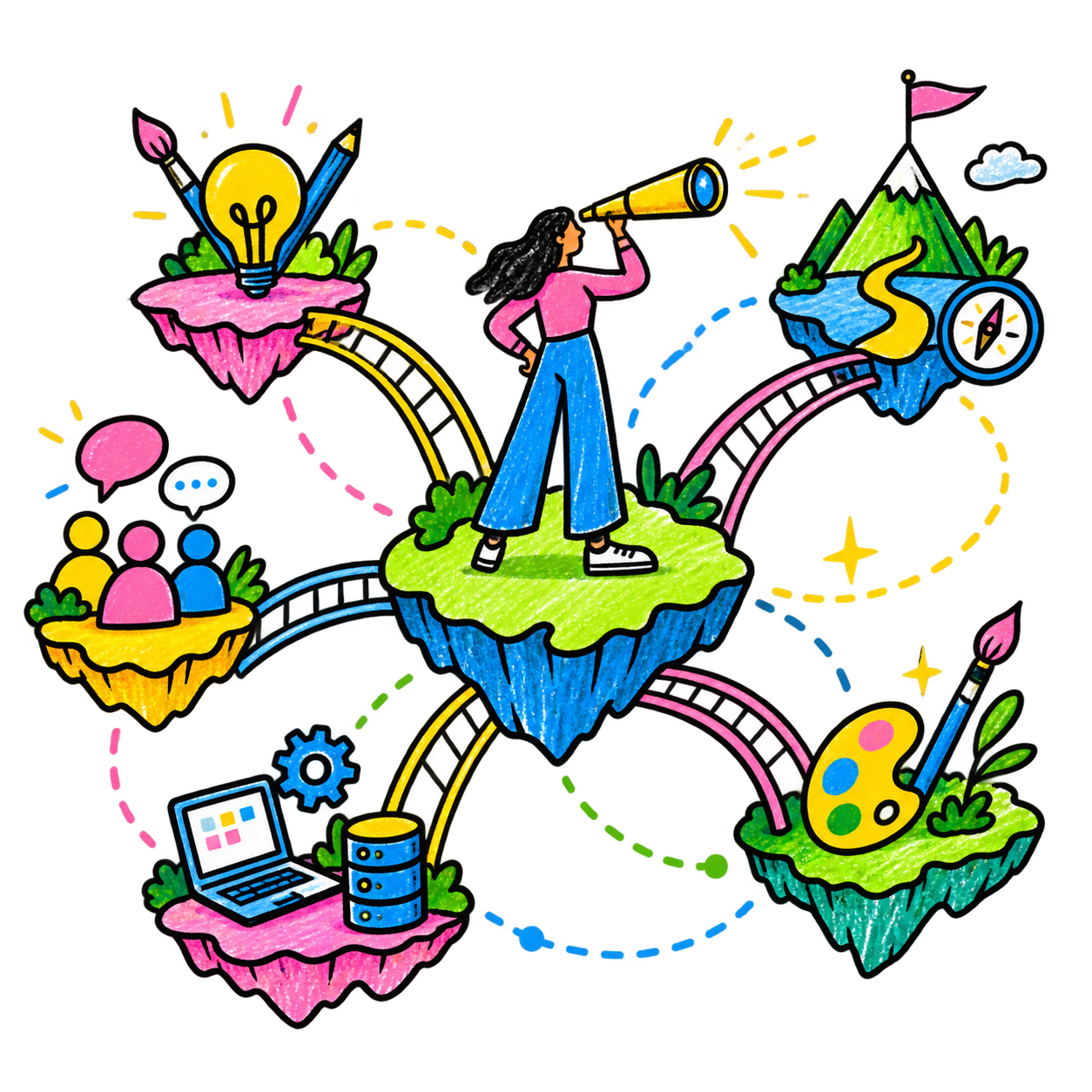
For leaders who have become very good at solving problems within their domain, but now need to see across disciplines, discover which problems are worth solving, and decide what should be created next.
Best suited for founders, executives, business unit leaders, functional heads, innovation and strategy leaders, product leaders, and high-potential managers moving into broader leadership roles.
You will practice looking beyond your own expertise, connecting ideas and capabilities across different fields, uncovering meaningful human needs, making decisions when there is no proven playbook, and turning an opportunity into a tangible product concept with AI as your collaborator.
ABOUT
Blind Spots in Modern Leadership
Do any of these questions feel familiar?
We have innovation processes. But are we actually discovering new possibilities? Or are we generating more ideas within the same old assumptions?
I am good at solving the problems customers bring me. But can I see the next problem before they do? Or do I have to wait until the need is clearly defined before I know where to move?
My company has accumulated valuable capabilities and assets. Can I see the connections we have not made yet? Or are our technologies, know-how, data, relationships, and expertise still living in separate boxes?
When I see an opportunity with no playbook, can I move forward with conviction? Or do I need benchmarks, proven models, and someone else’s success before I can form my own judgment?
My expertise helped me get here. But has it also become the lens that limits what I can see? Am I seeing the whole picture, or only the part I know best?
If these questions feel familiar, you are not alone.
THE CONTEXT
These blind spots are not new
Leading management thinkers have been pointing to different parts of these challenges for decades.
James March
James March, one of Stanford University’s most influential organizational theorists, distinguished the exploration of new possibilities from the exploitation of what organizations already know. His work showed why organizations can become increasingly efficient at what they already do while losing the ability to see what should come next. Learn about James March at Stanford · read his research in Organization Science
Roger Martin
Roger Martin, former Dean of the University of Toronto’s Rotman School of Management and author of The Opposable Mind, developed Integrative Thinking to help leaders move beyond narrow models and either-or choices. He argued that real business problems rarely stay within one function, and that leaders need to work across competing perspectives and interconnected variables. Read Roger Martin’s explanation of Integrative Thinking
Saras Sarasvathy
Saras Sarasvathy, Professor Emerita at the University of Virginia Darden School of Business and a leading scholar of entrepreneurship, developed Effectuation through her research into how expert entrepreneurs think and act under uncertainty. Her work shows how leaders can move forward when the future cannot be reliably predicted. Explore Sarasvathy’s work on Effectuation at Darden
Rethinking the MBA
Harvard Business School professors Srikant Datar and David Garvin, together with researcher Patrick Cullen, examined the gaps in management education in their influential book, Rethinking the MBA. They argued that conventional management education needed to place greater emphasis on integrative and innovative thinking, experiential learning, reflection, and leadership development. Read the Harvard Business School overview of their research
The blind spots have been identified.
What has been missing is a simple, integrated way for leaders to practice these capabilities together.
This brings us to one defining question for modern leadership:
As a leader, can I see what others don’t, connect what others haven’t, and create what doesn’t yet exist?This is exactly what ACE Creative Leadership Workshop is designed to help leaders practice.
THE PRACTICE
A practical way to build the capability
ACE uses a repeatable Self-Learning Cycle:
Curious→Remix→Empathize→Storycraft
Leaders practice the cycle through a guided zero-to-one simulation. They choose a real, well-known brand, take on the role of its owner, and begin with one question:
What should this brand create next?
Participants explore beyond what they already know, connect ideas across industries and disciplines, use Human-Centered Design to find real human value, and turn an opportunity into an MVP concept that others can see and discuss.
AI accelerates the entire journey. Participants research, think, reason, design, and build with AI while remaining responsible for the curiosity, connections, judgment, and direction.
AI provides speed and amplification. Humans decide where to look and what is worth creating.
In two workshop sessions, leaders experience a compressed version of the zero-to-one journey. They move beyond their specialties, learn to think across disciplines, and practice creating when no proven answer or playbook exists.
Modern leadership increasingly demands the ability to see what others don’t, connect what others haven’t, and create what doesn’t yet exist.
Join ACE Creative Leadership Workshop and jumpstart the cross-disciplinary creativity that modern leadership increasingly demands.
This is not a lecture. It is a complete innovation sprint.

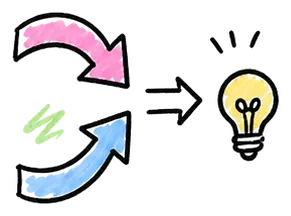
ACE is built on a simple but powerful belief: creative breakthroughs often begin when ideas from different worlds are reconnected. In this workshop, you will learn how to observe, remix, validate, build, and present with AI as a collaborator while keeping human judgment in command.
You will leave with more than notes or inspiration. Your team will create a visible body of work: brand research, an innovation concept, an evidence-based MVP, a user journey video, and a deployed public website.
2workshop sessions
2creative roles
1published project
From curiosity to a real, shareable product experience.
Each workshop has a different creative job. Together, they form one continuous journey from first spark to public presentation.

From no idea to a high-potential innovative concept.
You will start with curiosity, select a brand, uncover its Brand DNA, and use cross-disciplinary remixing to generate innovation directions. The First Workshop moves from understanding creativity as a repeatable process to choosing a brand, identifying its Brand Skills, Brand Personality, and Brand Belief, then using those findings as the raw material for new product and service possibilities.
After exploring multiple directions, your team will evaluate, select, and synthesize one high-potential idea. You will then tell the concept from the user's first-person perspective and turn the journey into an interactive storybook website that others can see, understand, and experience.
First Workshop Highlights
01Brand DNA Research Report
Decode the brand before remixing it.
Identify the brand's core skills, personality, and belief so your innovation starts from a clear strategic foundation.
02Innovative Idea Concept
Turn crossover thinking into one direction.
Explore multiple cross-industry possibilities, then select and synthesize the concept with the strongest potential.
03First-Person User Journey
Tell the idea through the user's eyes.
Shape the concept as a first-person experience that shows the problem, encounter, emotional shift, and value created.
04Interactive Storybook Website
Make the concept visible and experiential.
Transform the user journey into an interactive HTML storybook that communicates the idea through story, visuals, and simple interaction.

From innovative idea to evidence-based MVP and a public-facing product experience.
The Second Workshop turns creative energy into product focus. You will clarify the user, test assumptions, discover meaningful insights, and refine your idea into an MVP with a clear problem, audience, usage context, and feature logic.
The sprint is guided by four critical questions: What problem are you solving, and for whom? How do you know they really need it? What does user behavior tell you? How should those insights reshape the product? These questions help your team move from an exciting idea to a product concept that is grounded in real user and market evidence.
AI will support research, analysis, synthesis, reasoning, and visualization, but it will not decide the product direction for you. Your team's judgment will determine which assumptions to challenge, which features belong in the MVP, and how the user journey should be rebuilt.
You will then translate the MVP White-paper into a polished product story, build a mock official website with AI-assisted coding, and integrate your user journey video.
The website should feel like the official site of a real product, not a classroom assignment. Your team will shape the product positioning, origin story, core value, feature highlights, user scenarios, visual content, and call to action into one coherent experience that people can visit and believe in.
Second Workshop Highlights
01MVP Product Concept
Focus the idea around real user evidence.
Refine the concept by clarifying the user, the problem, the need, and the core feature set that truly belongs in the MVP.
02MVP White-paper
Translate thinking into product logic.
Organize the product goal, target users, usage context, core value, and MVP features into a clear MVP White-paper.
03Refined First-Person User Journey
Rewrite the journey after validation.
Rebuild the user story around the refined MVP, showing how evidence reshapes the product and improves the user's experience.
04User Journey Video
Show the product entering a real context.
Produce a first-person video that makes the problem, product intervention, and value creation easier to understand and present.
05Official Website Mockup
Build a product page people can believe in.
Create a polished mock official website with positioning, origin story, feature highlights, user scenarios, and a clear call to action. Embed the Second Workshop video so visitors can quickly understand how the product enters a user's life and creates practical value.
WORKSHOP COACHES
The people guiding the journey

Chris Lin
Serial entrepreneur and Founding Partner of KKCulture. Founder and former CEO of KKBOX, world’s first music streaming platform and a media entertainment unicorn in the Asia-Pacific.

Joshua Chao
Former creative director at KKBOX, faculty member of Shih-Chien University. Winner of prestigious international design awards, including Red Dot Award, SIGGRAPH, and Good Design Award.